Mastering Non-restrictive Clauses: Practical Guide with Examples

Mastering Non-restrictive Clauses: Practical Guide with Examples
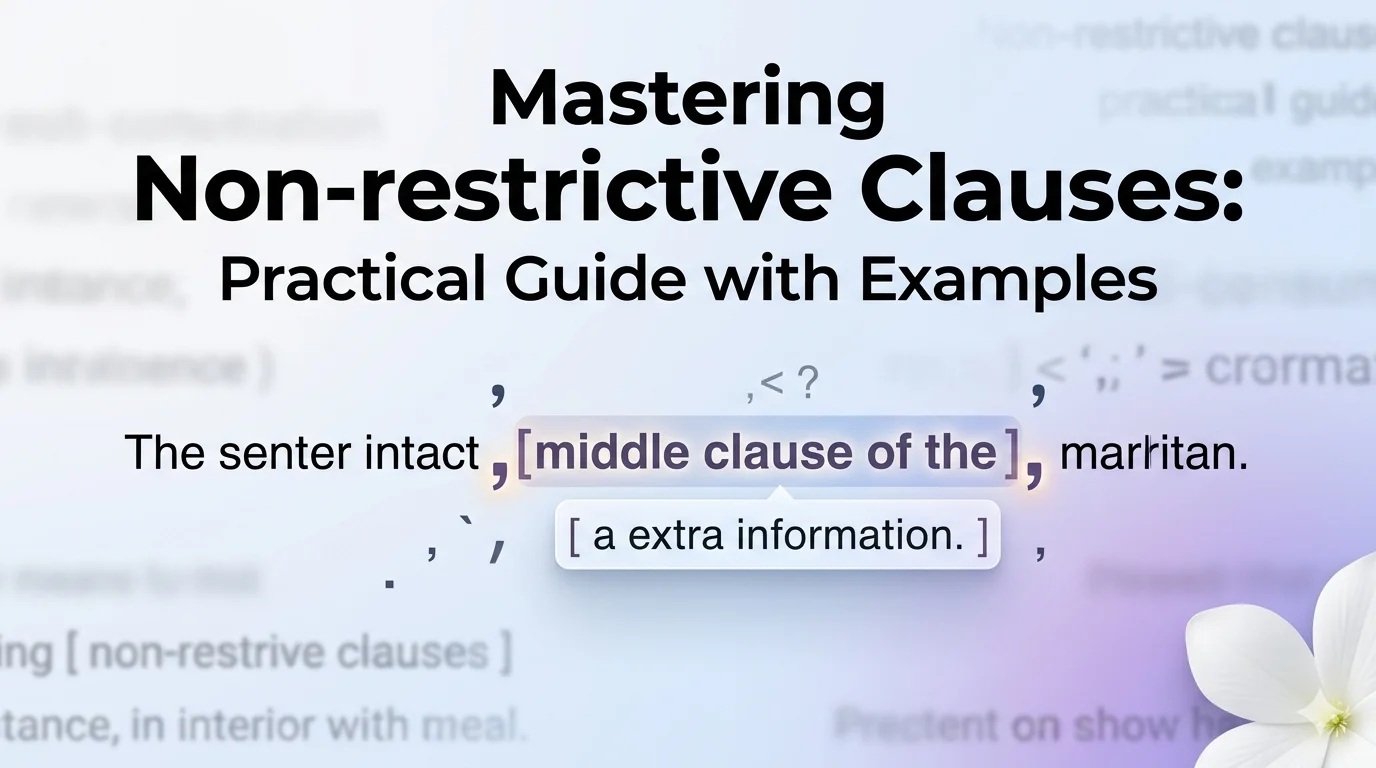
A non-restrictive clause is a type of sentence element that adds extra information without changing the main point, improving clarity and style. These clauses, which often use who, which, or that, are set off by commas to indicate the information is optional rather than essential. For example, “my brother, who hates spiders, screamed” clearly separates … Read more
Deduce vs. Induce – What’s the Difference?

Deduce vs. Induce - What’s the Difference?

Understanding Deduce vs. Induce in English can feel like navigating a thick fog where meanings seem similar, but usage differs. Many learners stumble because these terms appear alike, yet their functions in language are distinct. Deduce vs. Induce requires peeling back layers, examining smaller parts, and exploring definitions to gain clarity in practical use. When … Read more

Do You Ask or Pose a Question? Understanding the Difference

Do You Ask or Pose a Question? Understanding the Difference

Every day, we encounter situations where Do You Ask or Pose a Question can shape conversations, understanding, and even relationships, highlighting subtle shifts. When you ask a question, you’re typically seeking information, clarity, or a simple answer. Asking is direct, often casual, and focuses on getting facts. On the other hand, posing a question is … Read more

Wracking My Brain or Racking My Brain – Which Is Correct?

Wracking My Brain or Racking My Brain - Which Is Correct?

Many English learners often stumble upon the phrase Wracking My Brain or Racking My Brain, and it can confuse even diligent students, as the subtle differences matter. Some assume the correct term is “racking,” thinking of a rack or tool, while historically accurate is “wracking,” reflecting intense mental effort. This tiny twist often obscures meaning … Read more

Inside vs Inside Of: Master This Common English Confusion

Inside vs Inside Of: Master This Common English Confusion

When learning English, mastering the small details can make a big difference, and understanding Inside Of vs. Inside helps avoid confusion. This key distinction clarifies usage, making your sentences sound natural and fluent in everyday speech or formal contexts, while also improving your writing and conversational skills for learners striving toward native-like proficiency. The main … Read more

Informational vs Informative: Avoid This Common English Confusion

Informational vs Informative: Avoid This Common English Confusion

Understanding the difference between “informational vs informative” helps English learners communicate more clearly. Informational content mainly presents facts or data without much explanation. In contrast, informative content explains ideas and helps readers understand a topic more deeply. For example, a list of statistics about climate change is informational, while an article that explains those statistics … Read more